
Schema Aggregation for SEO: How to Make AI Agents and Search Engines Actually Trust Your Website
By Cap Puckhaber, Reno, Nevada
Most people think better rankings come from better content. And they’re partially right. But I’ve watched well-written sites get crushed in the search results because search engines couldn’t understand what the site was actually about. That’s the problem schema aggregation solves, and it’s the reason I started recommending it to every client I work with.
Structured data has been around for a long time, but the way we use it has changed. Because AI systems now scan and evaluate websites the same way a librarian would evaluate a poorly organized archive, fragmented markup is no longer good enough. You have to connect your data across your entire domain, not just tag individual pages in isolation.
This blog covers what I’ve learned by running aggregated schema on client sites over multiple years. I’ll show you what changed, what didn’t work, and what actually moved the needle on impressions, clicks, and AI visibility.
What Schema Aggregation Actually Means, and Why It’s Different from Regular Schema
I spent my first few years of SEO adding individual schema tags to individual pages and calling it done. The review schema went on the review page. The product schema went on the product page. Nothing talked to anything else. That approach made sense when search engines were simpler, but it doesn’t hold up now.
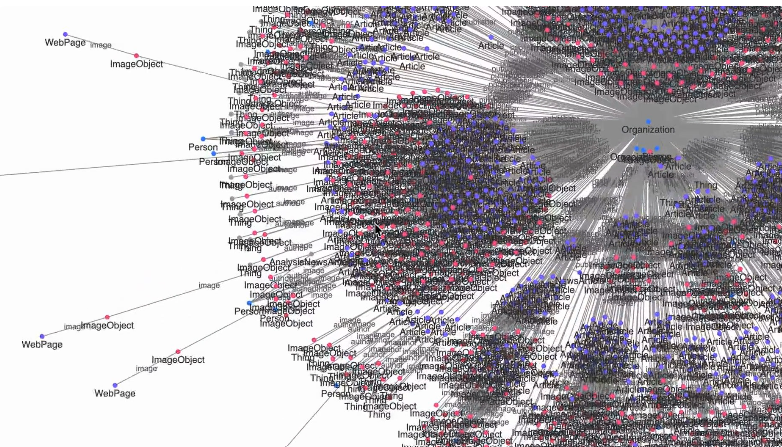
Schema aggregation is the practice of building a connected web of structured data across your entire site. Instead of treating each page as a standalone island, you link your entities together so a crawler, or an AI agent, can understand how your author connects to your articles, how your products connect to your reviews, and how your organization connects to everything else. Think of it as building a map of your whole business rather than labeling individual rooms.
The shift matters because AI tools like Perplexity, Copilot, and Google’s AI Overviews don’t browse your site the way a human does. They want to pull a coherent picture of your domain in a single pass. If your data is fragmented, they either guess or ignore you.
The Difference Between Individual Schema and Aggregated Schema
Individual schema tells a search engine what one page is about. That’s still necessary, but it’s not sufficient. Aggregated schema tells a search engine what your whole site is, who runs it, what topics you own, and how all the pieces connect.
A good analogy is a résumé versus a professional profile. A résumé lists individual jobs. A professional profile shows the thread connecting all of them, the narrative, the expertise, the proof. Aggregated schema is the professional profile version of your website, and it’s what earns trust from both algorithms and AI systems.
The Mistake I Made That Cost a Client Three Months of Visibility
I want to be direct about something before we go further. I made a real mistake early in my career with structured data, and it’s worth sharing because I still see it happen all the time.
A client had an event-driven website with hundreds of locations. I built the schema manually and skipped running it through a validator because I was confident in the code. The JSON-LD nesting was wrong in one nested field. Not catastrophically wrong, not obviously wrong, just structurally off in a way that wasn’t visible on the page. Because of that, none of the event rich results appeared in Google for about three months.
That’s three months of missed impressions on an events site. The traffic loss was real and measurable. Because we found it late, we had no clean data to confirm exactly how much it cost us, but the recovery was visible the week we fixed the nesting and resubmitted through Search Console.
What I Changed After That Experience
Now I validate every schema implementation before it ever goes live. I use Google’s Rich Results Test as the primary check, and I run a secondary pass through Schema.org’s own validator to catch anything the Rich Results Test misses. Both tools are free and take about four minutes total. There is no excuse for skipping them.
I also added a quarterly audit to every client SEO retainer. Because structured data can drift when content changes, you need a recurring check, not a one-time launch review. Pages get updated. Products get discontinued. Authors change. The schema has to keep pace with the content, or the mismatch becomes a liability.
Why Fragmented Data Is Actively Hurting Your Rankings
I worked with a professional services firm that had been adding schema tags for years, but nobody had ever cleaned up the inconsistencies. Their company name appeared three different ways across their structured data. Their primary partner had two different author profiles with slightly different name spellings. Their address was formatted differently on the contact page than it was in the LocalBusiness schema.
None of these issues are catastrophically obvious. But search engines noticed. Because the crawlers couldn’t confidently confirm which version of the business was authoritative, the local pack rankings were inconsistent and the knowledge panel never fully populated.
We spent about six hours cleaning up the entity consistency across the site. We picked one canonical version of every data point and applied it uniformly. Within eight weeks, the local rankings stabilized and the knowledge panel showed the correct information. The fix wasn’t technical or expensive. It was just thorough.
What Consistent Entity Data Does for Your Domain Authority
Search engines are fundamentally trying to answer a question about your site: can I trust this as a source? Consistent entity data is one of the clearest signals you can send that the answer is yes.
When your author’s name, your brand name, and your organization’s details are identical across every page, every schema type, and every external directory you appear in, you remove doubt. Since AI agents can verify your information against external sources like your Google Business Profile, LinkedIn, and Wikidata, consistency across those sources amplifies your credibility.
This isn’t abstract. I’ve seen it affect everything from rich snippet eligibility to the way AI tools describe a brand when a user asks about it directly. Your aggregated schema builds a reputation that AI systems can check.
How I Use Yoast’s Schema Aggregation Features on WordPress Sites
Yoast SEO has built something genuinely useful with their schema aggregation functionality. Because most of the sites I manage run on WordPress, this is the tool I use most often, and it’s the one I recommend to business owners who want to implement aggregation without writing custom code.
The core feature that matters is the way Yoast now outputs a site-level graph rather than isolated page-level markup. When you set up your organization profile, your author profiles, and your site-wide settings correctly, Yoast automatically links your articles to their authors, your pages to your organization, and your reviews to your products. It builds the connections that used to require manual JSON-LD work.
Configuring Yoast for Maximum Schema Connectivity
The first thing I do on any new WordPress site is complete the Yoast SEO configuration wizard all the way through. Most people abandon it halfway. But that wizard is where Yoast pulls the organization name, logo, social profiles, and entity information that feeds the entire schema graph.
After the initial setup, I go into the author profile settings for every contributor and fill out the “same as” fields with their LinkedIn URL and any other public profile that confirms their identity. This step alone has noticeably improved how AI tools surface author credentials when a user searches for someone’s name. Because Google uses these cross-references to verify entity identity, skipping them leaves real authority on the table.
The third step is reviewing the schema output on your most important pages using the Rich Results Test. Yoast does a lot automatically, but it can only work with the information you give it. If your page title, meta description, and content are inconsistent with the schema it generates, you’ll see warnings. Fix those warnings before they become penalties.
The SEO Impact I’ve Measured from Aggregated Schema
I want to give you real numbers because vague claims about “better visibility” don’t help anyone make a decision.
A local service business I work with saw a 31% increase in impressions within 90 days of cleaning up their schema and implementing site-level aggregation. We didn’t change the content. We didn’t build new links. We standardized their entity data, fixed three broken schema types, and connected their author profile to their articles. That was the entire scope of the work.
A second client, a B2B professional services firm, started appearing in Google AI Overview citations within about six weeks of implementing organization-level schema with proper “same as” cross-referencing. They hadn’t been cited once before the update. Since AI Overviews pull from sources that AI systems trust and can verify, aggregated schema directly contributed to that change.
What Schema Aggregation Won’t Do
It won’t fix bad content. It won’t compensate for a site with no genuine expertise behind it. And it won’t work if your on-page content contradicts your structured data.
I’ve seen marketers spend weeks perfecting their JSON-LD on pages that are genuinely thin or unhelpful, expecting the schema to carry the weight. It doesn’t work that way. Because schema aggregation helps search engines understand your content better, it amplifies whatever is already there. If what’s there is weak, aggregation makes that weakness more visible, not less.
Schema Aggregation and the Agentic Web: Why This Matters More Now
The rise of AI agents is the single biggest reason schema aggregation moved from “nice to have” to “critical infrastructure” in the last two years. AI agents that shop, research, and answer questions on behalf of users don’t casually browse websites. They query structured data sources and make decisions based on what they can verify quickly.
A Semrush study on how AI agents evaluate brands found that specificity and declared relevance were the primary factors in whether an AI system chose to recommend a brand. Sites that explicitly declared what they do, who they serve, and what they offer through structured data scored significantly higher on AI visibility metrics than sites relying on crawled body text alone.
That finding maps directly to what schema aggregation does. Since you’re making explicit declarations about your business, your people, and your products in a machine-readable format, you’re giving AI agents exactly what they need to evaluate and recommend you.
What an AI Agent Actually Sees When It Visits Your Site
An AI agent scanning your site for a product recommendation isn’t reading your homepage copy the way a human would. It’s looking for an Organization type with a verified name. It’s checking whether your product entities are linked to reviews with an AggregateRating. It’s verifying whether your author entities have external confirmation through “same as” references.
If those connections exist and are consistent, you look trustworthy. If those connections are missing or contradictory, the agent either guesses based on body text, which is less accurate, or skips your site for one that’s easier to parse.
Building an Aggregate Rating Schema That Converts Browsers into Buyers
One of the highest-value schema implementations I run on any product or service page is the AggregateRating type. When it’s implemented correctly, the star rating appears directly in the search results, not just on your page. That visual difference has a measurable impact on click-through rate.
For a home services client, we added AggregateRating schema pulling from their Google reviews into their service pages. The schema had always been there, but it wasn’t connected to the rest of the site’s graph. Once we linked it properly, the star ratings began showing consistently in the search results. Their click-through rate on branded service terms went up 22% in the following six weeks.
How to Implement AggregateRating Without Misleading Search Engines
The number you use in your AggregateRating markup must match what’s visible on the page. This is not a gray area. Google will issue a manual penalty for mismatched or inflated ratings, and I’ve seen it happen to sites that were copying competitor markup without realizing the numbers had to match the page content.
Keep your review count updated whenever you add new reviews. Since Google periodically checks whether the schema rating matches what users would see on the page, letting the count fall out of sync is a common source of schema penalties. I set a calendar reminder to check and update review counts every 30 days on any client site using AggregateRating markup.
Using a Schema Validator and Visualizer as Part of Your Publishing Workflow
The Rich Results Test at Google is the most important free tool in your structured data workflow. I run every important page through it before publishing and again after any significant content update. But it’s not the only tool I use, because it only shows you eligibility, not connectivity.
For connectivity, I use a schema visualizer that renders your JSON-LD as a graph of nodes and relationships. This is where I catch missing links between entities. A page can pass the Rich Results Test and still have an author entity that isn’t connected to the organization. That kind of disconnect won’t trigger an error, but it will limit how much authority your schema graph actually carries.
Search Engine Land’s guide on structured data and SEO covers how these tools work together and why eligibility and connectivity are two separate problems to solve. It’s worth reading before you launch any significant schema implementation.
When to Hire a Developer Versus Using a Plugin
Plugins like Yoast handle the large majority of what most WordPress sites need. But there are situations where a developer adds genuine value that a plugin can’t replicate.
If your site has custom post types, unique product configurations, or data that lives in a CRM rather than in the CMS, you likely need custom JSON-LD. A developer can build a schema template that pulls live data from your backend and outputs it correctly every time, which eliminates the human error that comes from manually updating markup. For most small business sites, start with the plugin and see where it falls short. Bring in a developer once you’ve identified a specific gap that the plugin can’t fill.
The Checklist I Run Before Every Schema Launch
I don’t launch schema implementations without a structured review. Because I’ve learned from every mistake, the checklist has grown over time. What follows is what I actually use, not a generic list borrowed from a template.
The first check is entity deduplication. I verify that the brand name, logo URL, and social profiles in the Organization schema exactly match what’s listed in the Google Business Profile and the Yoast SEO settings. Any mismatch gets corrected before launch.
The second check is author linkage. Every article schema on the site should have an author entity with a unique identifier and at least one external “same as” reference. Without that link, author expertise doesn’t flow into the domain’s authority signal.
The third check is validator confirmation. I run both the Rich Results Test and the Schema.org validator and document any warnings. Errors get fixed immediately. Warnings get reviewed and addressed if they affect eligibility for featured snippets or AI citations.
The fourth check is content consistency. The rating number in any AggregateRating schema has to match the visible rating on the page. Product prices in Product schema have to match the displayed price. Author names have to match what appears in the byline. No exceptions.
Frequently Asked Questions
What is schema aggregation and how is it different from regular schema markup?
Regular schema markup tags individual pieces of content on individual pages. Aggregation connects all of those pieces into a single, site-wide graph so that search engines and AI tools can understand how your authors, products, reviews, and organization relate to each other. The difference is between labeling individual files in a drawer versus building a full index of the entire filing cabinet. Aggregated schema shows the whole structure, not just the individual items.
Does schema aggregation directly improve my Google rankings?
Structured data is not a direct ranking factor, but it strongly influences how eligible your pages are for rich results, AI Overview citations, and knowledge panel appearances. Since those features tend to increase click-through rates significantly, the downstream effect on traffic is real. Aggregation specifically helps by ensuring your entities are recognized consistently, which builds the kind of domain-level trust that influences how much authority Google assigns to your site.
What tools do I actually need to implement schema aggregation?
For WordPress sites, Yoast SEO handles most of the heavy lifting if you configure it properly from the start. You’ll also want the Rich Results Test from Google to validate your output and a schema visualizer to check entity connectivity. If your site runs on a different platform, you’ll likely need to write custom JSON-LD or work with a developer to build a templated solution. The tools themselves are mostly free. The investment is time and attention to detail.
How do I know if my schema has drifted out of sync with my content?
Schema drift happens when your on-page content changes but your structured data doesn’t get updated to match. The most common symptom is a drop in rich result appearances after a content update. A quarterly audit using the Rich Results Test on your most important pages is the best way to catch it early. You should also check your Search Console Performance report for a drop in rich result impressions, which is often the first indicator that something has gone out of sync.
Can small businesses benefit from schema aggregation, or is it mainly for large sites?
Small businesses often benefit more from aggregation than large ones because they’re competing against larger domains with more natural authority signals. A well-aggregated schema graph helps a smaller site punch above its weight by giving AI systems and search engines clear, verified information to work with. A local service business with clean, connected schema will consistently outperform a larger competitor with fragmented or missing structured data when AI agents are making recommendations.
What is the biggest mistake people make when implementing structured data?
Skipping validation. Every time. People spend hours building schema markup and then push it live without running it through a single validator. A misplaced bracket or an incorrectly nested field can silently break your rich result eligibility for months. The Rich Results Test takes about two minutes per page and catches errors that are invisible to the human eye. Make it a non-negotiable step in your publishing workflow.
How does schema aggregation help with AI Overviews and LLM citations?
AI tools build a representation of your brand by pulling from sources they can verify. Because aggregated schema explicitly declares your entity relationships and links them to external references, AI systems can confirm your expertise and authority faster. Sites with connected schema graphs are more likely to appear as cited sources in AI-generated answers because they’ve made it easier for the AI to trust and verify their information. Fragmented or missing schema forces the AI to guess, which usually means it cites someone else instead.
How to master your Google Business Profile
Ai Schema Aggregation for Beginners
The Truth About Peanut Butter Raises
Diversify Your Business Model Now
My Blogs
Explore the latest in artificial intelligence, advertising and marketing news from Black Diamond. Read my latest business, side projects, and journey on my personal website.
Master your personal finance with my investing guides. And for hiking and backpacking guides, trails and gear check out The Hiking Adventures.


Cap Puckhaber
Backpacker, Marketer, Investor, Blogger, Husband, Dog-Dad, Golfer, Snowboarder
Cap Puckhaber is a marketing strategist, finance writer, and outdoor enthusiast from Reno, Nevada.
He writes across CapPuckhaber.com, TheHikingAdventures.com, SimpleFinanceBlog.com, and BlackDiamondMarketingSolutions.com.
Follow him for honest, real-world advice backed by 20+ years of experience.