

The Structural Breakthrough: Why Your Organizational Design is Killing or Scaling Your Business
By Cap Puckhaber, Reno, Nevada
The Structural Breakthrough: Why Your Organizational Design is Killing or Scaling Your Business
Since the onset of the pandemic, the corporate world has undergone a significant transformation. Among the most noticeable changes is the ongoing trend of tech companies and Fortune 500 businesses cutting middle management and VP-level jobs. While this move has been in progress for years, the pandemic accelerated the process. Businesses quickly realized that remote work and digital tools made it easier to communicate across all levels. This reduced the need for traditional hierarchies. Companies began to realize they could streamline operations by eliminating layers of management.
In this guide, Cap Puckhaber shares how a shift in structure can be the breakthrough you have been looking for. Changing your organizational structure sucks, and I will be the first to say it. If you do not do it correctly, it is a recipe for disruption and disaster. People’s careers are on the line and job titles can change. But structure done right is like activating the booster stage of a rocket. It is the catalyst to the next level of performance for any small business.
Why Companies are Flattening the Corporate Ladder
Many organizations are embracing leaner structures to improve efficiency and cut costs. With increased economic uncertainty, businesses have become more focused on agility and adaptability. Middle managers and VPs were traditionally seen as essential for overseeing day to day operations. Now, they are often seen as less essential in companies that emphasize self-managed teams. The shift toward data-driven decision-making is another driving factor in this evolution. Companies are investing in automation and AI to replace traditional managerial functions.
This reduces the need for managers to oversee tasks that machines can handle more efficiently. For those in the crosshairs of corporate restructuring, the cuts are career-shaking. Many VPs have spent decades climbing the ladder only to find their roles consolidated. It can feel like a personal setback as institutional knowledge no longer seems valued. The psychological toll of watching a role evolve into something less traditional is significant. Flexibility and the ability to learn new skills are now more important than seniority.
Learning from the Microsoft Structural Case Study
Let me explain the stakes by starting with a recent example at Microsoft. In the early 2000s, Steve Ballmer doubled down on an existing divisional structure. This model had strong divisional heads but limited cross-functional coordination. It was the wrong structure for a changed reality. The divisional model worked in the desktop era but failed in an internet-first era. Ballmer never changed the structure until it was too late. Under his tenure, Microsoft lost half of its enterprise value.
When Satya Nadella took over, he made it a priority to refine the organizational structure. He understood that a new strategy requires a new structure to execute. Under his leadership, Microsoft more than tripled in value. Structure can kill or it can strengthen your entire organization. As a leader, you must know when to let the current structure stand. I am going to share the tell-tale signs that you have a structural issue. These symptoms indicate that it is time to rethink how your business is designed.
Symptom 1: The Strategy Changed but the Structure Stayed
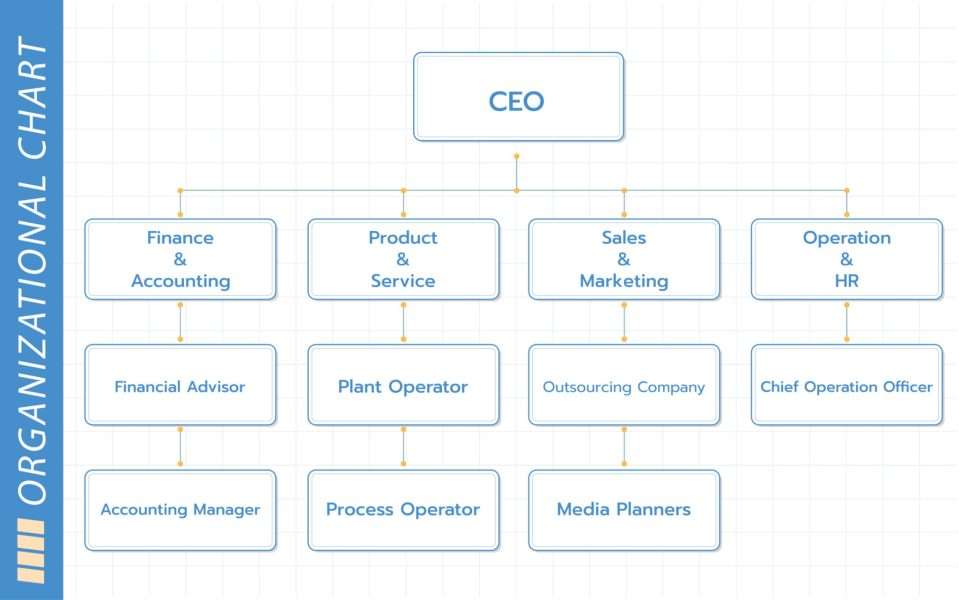
What would have happened to Microsoft if Nadella kept the old divisional structure? Despite his message about a cloud-first priority, the company would have stayed tied to desktop hardware. Power centers must be shifted to match the new vision. If you are launching a new product line or entering a new market, look at your org chart. If it looks the same as it did three years ago, you have a problem. Your structure is likely dragging against your new strategic goals.
Symptom 2: Strong Departments but Weak Coordination
You might be pleased with the performance of individual departments. But if those departments act like isolated silos, you have a structural issue. A good rule of thumb is that you need a role accountable for coordination. Many leaders make the mistake of thinking consolidation equals coordination. They put Sales and Product under one leader to force them to get along. This is a very risky move for any growing business.
It puts a high dependency on one individual leader. It could easily tip so that Sales shapes Product too much toward short-range quotas. Then the company misses out on the next round of long-range innovation. You actually want constructive conflict between Sales and Product. You just want that conflict to be managed toward sustained performance. A better approach is to energize a function accountable for cross-functional prioritization. This role acts as a peer to other major functions to ensure alignment.
Symptom 3: The New Business Unit is Failing
Entrepreneurs understand the importance of structure when a second business unit fails. The main business unit requires perpetual resources in time and money. The new unit often does not get the dedicated resources it needs to achieve escape velocity. It starts to feel like a stillbirth within the company. This happens because the new unit is trapped within the processes of the mothership. The key is to structure the organization so the new unit can succeed.
Give the new unit just the right amount of coordination and resources. The right structure allows you to manage different lifecycle stages at the same time. You cannot treat a startup unit the same way you treat your legacy business. They require different metrics and different levels of autonomy. If you try to force a new venture into old systems, you will kill the innovation. Structure your business to protect the new from being smothered by the old.
Symptom 4: The CEO has Become the Bottleneck
If you are the CEO, you have likely tried to delegate. You have attempted to make great hires to take things off your plate. Yet too many things are still coming back to you. You are working too long and seeing too little of your family. Every entrepreneur has been there at some point. The secret to freeing yourself from these tasks is structural. The right structure creates role clarity and the ability to delegate with control.
If you delegate the wrong things, you run the risk of causing systemic harm. Many CEOs attempt to solve this by hiring a COO to oversee all internal operations. This is highly risky and backfires much of the time. A better answer is a structure that allows you to stop being a bottleneck. It lets you focus on the right areas and delegate with visibility. If you don’t get this right, it is unclear who is accountable for what. Things will continually fall back onto your desk.
Symptom 5: A Chronic Lack of Role Clarity
The purpose of structure is to align accountability with authority. The person accountable for a decision should have authority over that decision. Have you ever been accountable for something you had no control over? That is the definition of soul-sucking stress and burnout. Your staff feels the same way when roles are blurred. If implementation stalls out after a decision is made, you have a structural issue. This shows up as a constant cycle of debate.
Multiple people from different departments believe they have authority over the same call. The secret to creating clarity starts with your structure. A good structure pushes authority as deeply as possible into the organization. It ensures those responsible for implementation have the power to make the call. Without this alignment, authority and accountability are hard to figure out. You end up with a team that is frustrated and slow to move.
Symptom 6: Multiple Senior Hires are Not Working Out
If you have made several senior hires that failed, look at your structure. One mis-hire is common for any business. Two can be written off as bad luck. But three or more senior mis-hires indicate a structural problem. A bad system will defeat a good person every time. You might be placing great people into functions with misaligned expectations. Get your structure right and you will have better clarity on the hires you need.
[Image showing the process of aligning senior hires with organizational roles]
This also applies to existing staff with performance issues. In the wrong structure, it is hard to tell if the person or the environment is the problem. In the right structure, you eliminate the variables. You have clear strategy and clear role clarity. Now you can clearly judge the people. I often see players move up a whole grade in performance once the structure is fixed. We did not change the people. We changed the environment they work in.
Symptom 7: You Nailed It and Now You Must Scale It
Having the right structure is a post product-market fit problem. If your business is still searching for fit, do not worry about structure yet. It would be like trying to teach a toddler calculus. Structure must always follow strategy and not the other way around. If you create a structure too soon, you might over-engineer the design. This makes it hard to adapt to a quickly changing strategy. Find your fit first and then take on the design challenge.
As your business moves into the scaling stage, structure is the linchpin. Leading your business from within the right structure makes your job more creative. It allows you to move away from the daily grind of survival. You can focus on the systems that will carry you to the next level. When you make the leap to scaling up, you need a structure designed for it. This is how you avoid the chaos that kills most growing companies.
Symptom 8: There is Too Much Internal Chaos
At some point, every team realizes there is too much internal chaos. It can be fun in the early days but it becomes a death sentence as you grow. Founders are often terrified of going too far toward bureaucracy. They do not want too many policies and procedures that kill the spirit. The secret here is also structural. Some functions in your structure need to remain highly autonomous. You must give them the space to execute and be effective.
Other functions that bring order out of chaos also need a place. But they do not need to run the entire show. Efficiency will always overpower effectiveness over time if you are not careful. You need to design your structure so effectiveness functions do not report to efficiency ones. Sales and innovation should not report to HR or manufacturing admin. If they do, you will end up like the bureaucratic institutions you want to disrupt.
Symptom 9: Short-Range Pressure Overpowers Development
I once consulted with a startup that reached fifty million in sales. But they had not innovated on anything in three years. The CEO was worried they had lost their edge. The leader in charge of demand generation was also in charge of innovation. This person was consumed with driving sales to reach higher quotas. They had no time or energy to focus on the long-term needs of the company. Short-range pressure will always win in that scenario.
[Image illustrating the conflict between short-term sales goals and long-term innovation]
As we designed a new structure, this leader had to let go of demand generation. Almost overnight, new innovations started to bear fruit for the business. Short-range pressure will always overpower long-range development needs if they are combined. You must design the business to execute on the short-range and develop for the long-range simultaneously. You cannot allow the same leader to head up competing initiatives. It is a hard truth that every leader must face.
Symptom 10: You Have High Sales and Low Profits
If your organization has growing sales but lacks sustainable profits, look at your structure. Even if you are grabbing market share, you need the ability to control profits. You might think profit control is just for the CFO. But near-term profit control should be delegated closer to the customer. If a CFO makes pricing decisions in a vacuum, they might kill your effectiveness. A better approach is to delegate pricing management to those who know the market.
The parameters of pricing must be set centrally by the CEO. But discounts and special offers should be pushed to a role closer to the customer success team. This allows the business to align with the needs of the marketplace while meeting goals. If you want to be more profitable, you need a function accountable for it. The trick is making sure you put that accountability in the right place. Profitability is a structural outcome as much as a financial one.
Strategies for Middle Managers to Stay Relevant
For middle managers and VPs in the crosshairs, adapting is key. The future of work will continue to be shaped by technology. You should take the initiative to learn new tools that help you manage teams. Upskilling in areas like data analytics and AI will make you more valuable. Shift from a command and control style to becoming a leadership coach. Focus on mentoring and developing employees rather than overseeing every task.
Showcase your agility in a leaner organizational structure. Companies want employees who can quickly adapt to changing priorities. Be proactive about volunteering for new projects and learning different aspects of the business. Align yourself closely with the long-term vision and goals of the company. Show how you can contribute to the overall strategy through efficiency. Managers who do this are more likely to maintain their roles during a restructure.
Diversifying Skills in a Tech-Driven Landscape
Many VPs are responding to these challenges by diversifying their skill sets. Some are pursuing certifications in project management or data science. Others are branching out into consulting or freelance work. They offer their leadership skills to a variety of clients on a project basis. Networking and professional development are also common strategies for survival. Attending industry conferences provides both support and new career opportunities.
The reduction in management is a result of businesses aiming to reduce overhead. With the rise of automation, many functions can be streamlined. By cutting back, companies aim to flatten their structures and eliminate bureaucracy. Remote work proved that employees did not need constant supervision. As a result, businesses are adopting leaner models that prioritize innovation. This is a necessary step toward greater agility in a competitive market.
Embracing Technology for Managerial Success
Managers must move away from tracking and toward high-level strategy. It is currently replacing managerial tasks such as scheduling and reporting. When sixty percent of a manager’s day is administrative, the role is hard to justify. Survive by moving toward human-centric coaching that AI cannot yet replicate. VPs must shift from being information routers to being value creators. This means breaking down silos between departments to drive growth.
Focus on cross-functional integration and revenue generation. Guide the human element of the organization through digital transformations. Emotional intelligence is a future-proof skill that technology cannot automate. Managing team conflict in a hybrid world requires deep human understanding. Strategic thinking allows you to look at data and ask what is next. Adaptability is the willingness to pivot from being a boss to a facilitator.
Final Thoughts on Structural Transformation
The cutting of management positions speaks to the changing nature of leadership. While these changes are difficult, they offer an opportunity for growth. By embracing new technology, VPs can remain relevant and add value. For businesses, the shift toward leaner structures is a necessary step. It fosters faster decision-making and fosters innovation across the board. Structure is the foundation upon which everything else in your business is built.
As a leader, you can focus on culture and hiring all you want. But if you don’t have the right organizational structure, none of those things matter. With the foundation of the right design, you can truly thrive. Keep this list of ten symptoms in mind as you reflect on your business today. Use them as your guide to know when it is time to rethink your structure. Structure enlivens and supports the work you do every day.
Frequently Asked Questions
Why is this shift happening now instead of years ago?
The desire for leaner operations has always existed in business. However, the pandemic served as a massive proof of concept for the corporate world. Businesses were forced into a remote work experiment that proved productivity without supervision. This combined with the maturation of AI provided executives with the tools to dismantle hierarchies. They now have the confidence to remove expensive and multi-layered management structures.
Does flattening the hierarchy actually improve company performance?
In theory, removing middle layers allows information to travel faster. Decisions can be made more quickly from the front lines to the executives. However, the risk is manager burnout if the workload is not reduced. Remaining leaders may find themselves stretched too thin. This can lead to a decline in employee morale and the quality of mentorship. You must ensure that cutting layers does not lead to a loss of essential guidance.
Is AI actually replacing managers or just their tasks?
It is currently replacing managerial tasks like scheduling and performance tracking. When administrative tasks make up the majority of a role, the position is hard to justify. Managers who survive are those who move toward strategy and human-centric coaching. These are skills that AI cannot yet replicate in the workplace. You must shift your focus to the areas where human judgment is most valuable.
How can a VP prove their value when their role was oversight?
VPs must shift from being information routers to being value creators. They should focus on cross-functional integration and breaking down departmental silos. Linking leadership directly to revenue growth or cost-saving innovation is also essential. Guiding the human element of the organization through digital change shows immense value. You must move beyond ensuring teams follow process to actively driving strategic results.
What are the most future-proof skills for middle managers today?
Emotional intelligence is a critical skill for managing conflict in a remote world. Strategic thinking allows you to look at data and determine what comes next. Adaptability is the willingness to pivot from a boss to an internal consultant. These are soft skills that technology cannot automate. Focusing on these areas ensures you remain a vital part of any organizational structure.
Improve results with this AI performance reviews. Review the latest health-conscious trends for insights. Cap Puckhaber dives into TikTok ban impact.
My Blogs
Explore the latest in artificial intelligence, advertising and marketing news from Black Diamond. Read my latest business, side projects, and journey on my personal website.
Master your personal finance with my investing guides. And for hiking and backpacking guides, trails and gear check out The Hiking Adventures.


Cap Puckhaber
Backpacker, Marketer, Investor, Blogger, Husband, Dog-Dad, Golfer, Snowboarder
Cap Puckhaber is a marketing strategist, finance writer, and outdoor enthusiast from Reno, Nevada.
He writes across CapPuckhaber.com, TheHikingAdventures.com, SimpleFinanceBlog.com, and BlackDiamondMarketingSolutions.com.
Follow him for honest, real-world advice backed by 20+ years of experience.