
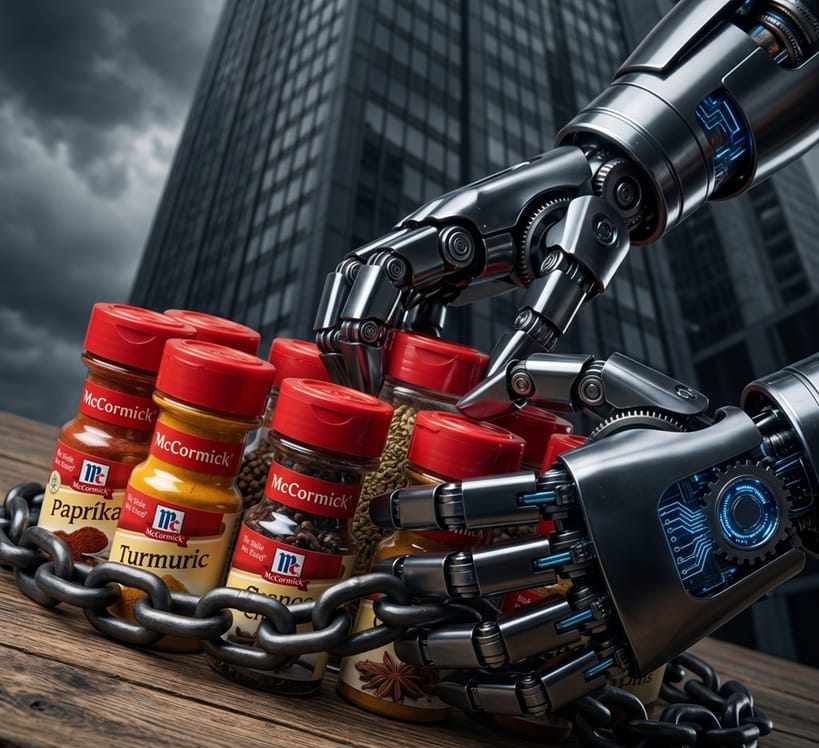
The Flavor Trap: Why the McCormick Unilever Merger is a Massive Marketing Gamble
By Cap Puckhaber, Reno, Nevada
I watched a massive corporate marriage fall apart, and it felt like a warning sign for our entire industry. The original pairing looked brilliant on a boardroom whiteboard. One legacy equipment manufacturer bought an experiential entertainment giant to control the entire consumer lifecycle. Instead of true operational synergy, the buyer inherited a high-overhead monster right as consumer entertainment budgets collapsed. The asset lost half its value, the stock plummeted, and a fire sale to private equity became the only rescue plan.
That disaster was the Callaway and Topgolf merger. My deep dive into that corporate wreck became one of my most widely read analyses because people love studying multi-billion dollar miscalculations.
Now, another corporate giant is stepping onto the exact same high wire.
McCormick and Company dropped a bomb on the consumer packaged goods sector by announcing a definitive agreement to acquire Unilever’s global food division. The transaction is a monster, valued at a staggering forty-four billion dollars. The business world is cheering the birth of a global flavor powerhouse. Wall Street analysts are writing glowing reports about cost efficiencies and international distribution pipelines.
I see the exact same structural cracks that broke the Topgolf marriage.
The Blueprint of a Food Industry Megadeal
The details of this transaction are massive. McCormick is swallowing iconic kitchen staples like Hellmann’s mayonnaise and Knorr soups. They intend to marry these brands to their existing empire of French’s mustard, Cholula, and Frank’s RedHot.
The cash and stock structure leaves the combined entity with twenty billion dollars in collective revenue. The corporate narrative claims that spices, condiments, and cooking aids belong under one roof. The executives believe they can dominate the dinner table by controlling both the primary ingredients and the toppings.
The market response was immediate and telling. The stock prices for both companies dropped right after the announcement, revealing deep investor skepticism.
This reaction happened because the deal introduces a massive amount of structural weight. The integration roadmap spans multiple years, requiring disciplined execution across completely different supply chains.
The leadership team is betting that legacy brand equity can withstand a fundamental shift in retail consumer behavior.
The Premium Brand Illusion
The biggest risk in this transaction is the belief that a premium logo can guarantee market share. McCormick is paying an absolute premium for household names right as consumer loyalty to those exact names is dying.
Years of inflation have fundamentally altered how normal people buy groceries. Shoppers are actively rejecting the premium pricing of legacy consumer packaged goods.
The grocery aisle has turned into a battleground where heritage labels are losing ground every single week.
This environment makes a massive, debt-fueled acquisition incredibly dangerous. If the target audience is fleeing premium options, buying more premium brands will not solve your growth problem.
The acquisition relies on an outdated playbook that assumes big marketing budgets can force consumers to pay higher prices.
The Rise of Private Labels
The actual threat to this merger is sitting right next to Hellmann’s on the grocery shelf. Store-brand mayonnaise and generic spices are growing at an unprecedented rate.
Consumers have realized that private-label products offer identical quality for a fraction of the cost. The psychological barrier to buying store brands has vanished.
This reality completely undermines the valuation of the Unilever food portfolio. McCormick is taking on billions in debt to buy brands that are actively losing their competitive moat.
The marketing machine cannot easily fix this problem. When a household budget is tight, a flashy advertisement will not convince a shopper to spend double on a jar of mayonnaise.
The generic alternative is winning because it passes the basic value calculation at the cash register.
The Failure of Adjacent Synergy
The corporate world loves the word synergy, but true synergy is incredibly rare. Executives often confuse product adjacency with operational alignment.
Selling dry black pepper in a plastic shaker is entirely different from distributing perishable condiments in glass jars.
The sales channels, manufacturing plants, and supply chain logistics do not magically blend together just because both items sit in a kitchen.
This misunderstanding is the exact trap that sank the Topgolf acquisition. Callaway believed that operating a high-overhead hospitality venue was identical to manufacturing golf clubs.
They misjudged the capital requirements and the operational complexity. McCormick is risking the same operational indigestion by expanding into heavy, low-margin food production categories.
The Dangerous Allure of Scale
Many business owners believe that bigger is always safer. This belief is a dangerous illusion that drives companies to over-extend.
Scale introduces bureaucracy, slows down decision-making, and detaches leadership from the actual end user.
A company with twenty billion dollars in revenue is not inherently more stable than a nimble competitor.
The added revenue from the Unilever portfolio comes with massive overhead. McCormick must now maintain thousands of additional global employees and factories.
If the consumer packaged goods market experiences a sharp decline, that massive scale transforms into a financial anchor.
The focus shifts from innovation to mere debt servicing and cost cutting.
The Portfolio Trap for Marketers
The lesson from this merger applies to businesses of all sizes. The portfolio trap occurs when a company acquires new services or products out of vanity rather than operational fit.
I see this mistake constantly in regional business communities.
A local landscaping company buys a commercial tree removal service because both businesses operate outdoors.
The owner assumes the existing customer base will seamlessly buy both services.
The reality is always more complicated. The equipment is different, the safety regulations are stricter, and the sales cycle requires a completely separate approach.
The business owner ends up draining cash from the profitable core business to support the struggling new acquisition.
The Fallacy of Cross-Merchandising
The boardroom presentation for this food merger undoubtedly included slides about cross-merchandising. The executives envisioned digital coupons that discount French’s mustard when you buy Knorr rice.
This strategy sounds logical to a corporate marketer, but it rarely changes consumer behavior.
Shoppers do not plan their meals around corporate portfolio alignment.
A discount on a secondary brand is rarely enough to sway a buyer who has already switched to a generic store alternative.
The marketing team ends up spending millions on complex promotional campaigns that yield minimal revenue lifts.
The consumer sees through the corporate bundling strategy and continues buying based on pure price and utility.
What We Learned from Topgolf
The parallel between these two deals is impossible to ignore. Callaway ruined a highly profitable, efficient golf equipment business because they wanted to own an entertainment ecosystem.
They over-leveraged their balance sheet to chase a trend that they did not operationally understand.
The result was a forced divestiture that destroyed billions in shareholder value.
McCormick is running the exact same play with Unilever’s food business. They are risking a highly profitable spice enterprise to buy slow-growing, inflation-weary food staples.
The desire for massive corporate scale is blinding the leadership team to the structural risks on the ground.
The market has changed, and a massive portfolio of legacy brands is no longer a guaranteed safety net.
The Core Deficit of Modern Branding
The real issue facing these mega-brands is a core deficit of genuine utility. A brand cannot survive on nostalgia or historical market dominance.
The modern consumer demands an undeniable reason to pay a premium price.
If your product does not offer a distinct, uncopyable advantage, your brand equity is non-existent.
McCormick and Unilever have relied on grocery shelf placement and massive distribution networks for decades.
The digital age and the rise of direct-to-consumer alternatives have leveled the playing field.
A smaller, agile brand can target a specific audience on a fraction of the budget, leaving the slow-moving conglomerate exposed.
How to Protect Your Own Brand
You do not need a forty billion dollar balance sheet to apply these insights to your own business operations. The defense against market contraction is depth, not breadth.
Instead of expanding into adjacent categories, you must deepen your relationship with your existing core audience.
True business security is found in undeniable, localized customer utility.
You must analyze your current product line and aggressively cut the items that rely on pure brand vanity.
Focus your marketing budget on the core offering that delivers the highest profit margins and the strongest customer retention.
Do not let the illusion of scale distract you from the daily reality of operational efficiency.
The Myth of the All-in-One Solution
The corporate world is currently obsessed with creating all-in-one platforms and ecosystems. We see this trend in software, retail, and manufacturing.
The theory is that consumers want a single corporate entity to handle every aspect of their lives.
The reality is that consumers prefer best-in-class specialization.
When you try to be everything to everyone, you end up meaning nothing to anyone. McCormick is trying to be the entire flavor ecosystem for the global consumer.
They risk diluting the incredible brand equity of their core spice business.
The consumer wants high-quality black pepper from McCormick, but they do not necessarily want their mayonnaise from the same corporate entity.
The High Cost of Debt Servicing
The financial structure of these massive deals is a ticking time bomb for corporate marketers. McCormick is paying fifteen billion dollars in cash to secure this transaction.
That cash must be raised through massive debt issuance, which comes with significant interest payments.
The money spent on debt servicing is money that cannot be spent on brand innovation.
The marketing department will likely see their budgets squeezed to pay down the merger debt.
The core brands will suffer from lack of investment, creating a downward spiral of declining market share and reduced revenue.
The corporate giant becomes a prisoner to its own balance sheet.
The Changing Face of Retail Distribution
The retail environment is no longer controlled entirely by a few massive conglomerates. Grocery chains are giving more shelf space to their own private labels because the profit margins are significantly higher for the retailer.
The store brand is no longer hidden on the bottom shelf.
Retailers are actively promoting their own items, pushing legacy brands out of the prime eye-level slots.
This shift completely changes the distribution dynamics that McCormick is counting on.
Owning Hellmann’s does not guarantee premium shelf placement if the retailer prefers to sell their own private-label mayonnaise.
The acquisition strategy fails to account for this fundamental shift in retailer power.
The Danger of Ignoring the Local Moat
The biggest mistake a growing company can make is ignoring the local competitive moat. A local business has an incredible advantage over a global conglomerate.
The local business can adapt instantly, build genuine human relationships, and tailor its offerings to the specific community.
A global corporation cannot replicate this level of hyper-local marketing.
McCormick is focusing entirely on global scale, leaving themselves vulnerable to nimble, local flavor brands that are capturing the high-end market.
The same reality applies to your business.
Do not abandon your local advantage to chase a broader market that you cannot operationally defend.
The Final Verdict on Corporate Indigestion
The McCormick and Unilever transaction will be studied for the next decade. If the economy stabilizes and consumer brand loyalty miraculously returns, the deal might look like a success.
The current structural trends indicate a very different outcome.
The acquisition bears all the hallmarks of a classic corporate miscalculation driven by an obsession with scale.
The integration will be slow, the debt will be heavy, and the consumer will continue to prioritize value over heritage logos.
The business world will likely watch another massive flavor powerhouse suffer from severe corporate indigestion.
The lessons are clear for any marketer willing to look past the corporate press releases.
Why Agile Marketing Beats Big Budgets
The true winner in the modern market is agility, not size. A small marketing team can launch a campaign, test a pricing strategy, and pivot within twenty-four hours.
A massive corporation requires months of committee meetings and legal approvals to change a single headline.
This agility allows smaller brands to exploit the cracks left by slow-moving giants.
McCormick will spend the next three years focusing inward on operational integration and corporate restructuring.
This internal focus creates a massive opportunity for independent brands to step in and capture the market.
The marketing landscape belongs to the fast, the focused, and the operationally efficient.
The Reality of Post-Merger Integration
The corporate press release makes integration sound like a simple puzzle. The reality of combining two global operations is an absolute nightmare.
The corporate cultures are different, the enterprise software systems do not communicate, and the top talent often flees during the transition.
The disruption can cause severe operational friction that hurts the customer experience.
The spice business could suffer if the sales team is distracted by the condiment rollout.
The internal chaos undermines the entire thesis of the merger.
The business world frequently forgets that corporations are made of people, not just financial line items on a spreadsheet.
Cultivating Undeniable Customer Utility
The only way to build an inflation-proof business is to create undeniable customer utility. Your product must solve a specific, painful problem for your audience.
If your marketing relies entirely on emotional branding without a foundation of actual utility, your business is at risk.
The modern shopper is stripping away the emotional fluff and buying based on pure performance.
You must audit your current marketing strategy to ensure you are communicating clear, measurable value.
Show your customers exactly how much time, money, or effort your product saves them.
This practical approach will protect your market share when consumers start cutting non-essential spending.
The Illusion of Consumer Inertia
Many legacy brands survive for years simply due to consumer inertia. People buy the same brand of mayonnaise because their parents bought it, or because it is the most familiar label on the shelf.
This inertia is a fragile foundation for a multi-billion dollar business.
A major economic disruption can break the habit instantly, forcing consumers to look at alternative options.
The current economic climate has broken consumer inertia across almost every retail category.
Once a shopper tries a private-label alternative and realizes the quality is identical, they rarely return to the premium brand.
The habit is broken, and the legacy brand equity vanishes overnight.
The Strategic Path Forward for Your Business
The takeaway from the McCormick Unilever megadeal is not to fear growth, but to fear reckless expansion.
You must ensure that every new service or product line you introduce reinforces your core operational strength.
Do not let the desire for higher revenue drive you into categories you do not understand.
Build a business that is deep, resilient, and deeply connected to its audience.
Let the global conglomerates chase the illusion of scale while you dominate your specific market.
The future belongs to the disciplined operator who understands that true synergy is built on efficiency, not ego.
Frequently Asked Questions
Why did the McCormick and Unilever food merger happen?
The transaction occurred because McCormick wanted to expand its global footprint and create a unified flavor portfolio. The acquisition brings iconic staple brands like Hellmann’s and Knorr under the same corporate umbrella as McCormick’s existing spice and sauce lines. The executives believe that combining ingredients, condiments, and cooking aids will allow them to dominate the grocery aisle and restaurant kitchens globally.
Why is this acquisition considered a major marketing gamble?
The merger is highly risky because McCormick is paying a premium price for legacy brand equity at a time when consumer behavior is shifting away from household names. Years of inflation have driven shoppers to reject premium pricing and adopt private-label alternatives. Taking on massive debt to buy slow-growing brands that are actively losing market share to store brands could cause severe financial strain.
What can small business owners learn from this corporate merger?
Small business owners must learn to avoid the portfolio trap, which occurs when a company expands into adjacent service lines or products without true operational alignment. Expansion out of vanity or a desire for scale frequently drains resources from the profitable core enterprise. Businesses should focus on deepening customer relationships and improving operational efficiency rather than chasing reckless growth.
How does the Topgolf failure relate to the McCormick deal?
The Topgolf merger failed because Callaway assumed that product adjacency meant operational alignment, resulting in massive debt and a forced fire sale. McCormick is risking the same corporate indigestion by absorbing low-margin food production lines that require entirely different supply chains than dry spices. Both deals demonstrate the danger of over-leveraging a stable core business to chase a massive portfolio expansion.
Why is consumer brand loyalty declining across retail industries?
Brand loyalty is hitting historic lows because sustained economic pressures have forced consumers to prioritize value over heritage logos. Shoppers have discovered that private-label products offer comparable quality for a significantly lower price point, breaking long-standing buying habits. This structural shift undermines the valuation of massive corporate brand portfolios that rely on premium pricing models.
How can local brands compete against massive corporate mergers?
Local brands can win by leveraging their agility, building deep community relationships, and maintaining high operational efficiency. A small business can pivot strategies within twenty-four hours, whereas a massive conglomerate requires months of corporate approvals. By focusing on hyper-local customer utility and specialized service, independent operators can easily capture market share from distracted corporate giants.
For a deeper look into how food consolidation impacts normal retail buying choices and reshapes what ends up in home pantries, check out this comprehensive Food Merger Breakdown. This video explains how massive corporate moves shift the balance of power away from consumers right at the checkout counter.
How to master your Google Business Profile
Ai Schema Aggregation for Beginners
The Truth About Peanut Butter Raises
Diversify Your Business Model Now
My Blogs
Explore the latest in artificial intelligence, advertising and marketing news from Black Diamond. Read my latest business, side projects, and journey on my personal website.
Master your personal finance with my investing guides. And for hiking and backpacking guides, trails and gear check out The Hiking Adventures.


Cap Puckhaber
Backpacker, Marketer, Investor, Blogger, Husband, Dog-Dad, Golfer, Snowboarder
Cap Puckhaber is a marketing strategist, finance writer, and outdoor enthusiast from Reno, Nevada.
He writes across CapPuckhaber.com, TheHikingAdventures.com, SimpleFinanceBlog.com, and BlackDiamondMarketingSolutions.com.
Follow him for honest, real-world advice backed by 20+ years of experience.